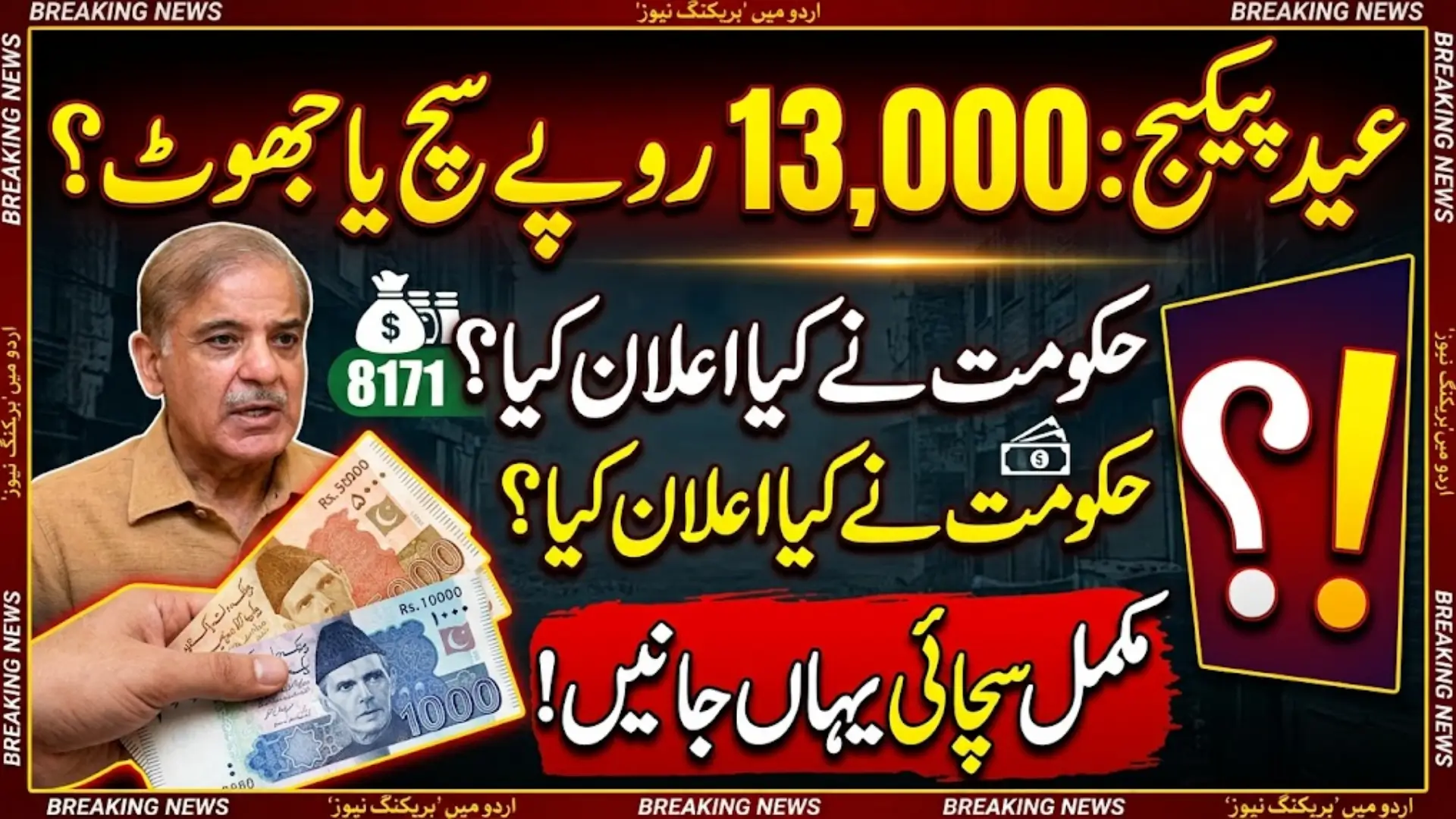
Every Eid season, millions of people search for government relief packages hoping to receive financial help. But not every scheme you see online is real. This article will tell you the full, verified truth about the so-called “Prime Minister Eid Package 2026” — what is real, what is fake, and how to stay safe.
What Is the Prime Minister Eid Package 2026?
Around Eid and Ramadan every year, the government launches genuine welfare programs to help low-income families. One verified example is the Prime Minister Ramzan Relief Package 2026, which offers Rs. 13,000 in financial support along with discounted essential food items to deserving low-income households. This program was developed and operated by the National Information Technology Board under the direct oversight of the Prime Minister’s Office.
However, alongside real programs, scammers create fake schemes using similar names to confuse and trick people. The “Prime Minister Eid Package 2026” being widely shared on social media and WhatsApp is one such case that requires careful fact-checking.
What Are the Fake Eid Packages Circulating in 2026?
Several fraudulent schemes have gone viral this Eid season. Here are the confirmed fake ones:
Fake Maryam Nawaz Eidi Scheme A fake “Maryam Nawaz Eidi Scheme” spread widely across Pakistan, claiming to give Rs. 5,000 to eligible residents via Easypaisa or JazzCash. Scammers used a fake website that looked official but was privately registered, promoted gambling apps, and collected ID card numbers, mobile numbers, and wallet details.
There is no official government announcement, verified portal, or authorized short code for any such “5,000 Eidi Scheme.”
Fake 9999 Ramadan Package Messages Many citizens reported fake messages promising Rs. 13,000 assistance. Fraudsters used similar short codes or WhatsApp numbers to create confusion. Scammers sent messages such as: “Congratulations! You are selected for Rs 13,000 Ramadan Package” or “Send CNIC and OTP for confirmation” or “Pay processing fee to receive relief amount.” These messages are completely fake.
Key Warning Signs of a Fake Government Package
Knowing how to spot a fake scheme is the most important skill you can have. Here are the red flags:
- Asks for your OTP or password — Real government programs never ask for one-time passwords
- Requests a processing fee — The government does not charge registration or confirmation fees
- Shared only on WhatsApp or Facebook — Genuine schemes are announced on official government websites and verified news channels
- Unofficial website domain — Fraudsters create web pages designed to look identical to official government portals, but the domain name is slightly different or unverified
- Too good to be true — Promises of large cash for zero effort are almost always scams
- No official contact information — Only a generic form exists with no officer names or official addresses
How These Scams Work: Step by Step
Understanding the process helps you avoid becoming a victim:
You receive a message on WhatsApp or see a post on Facebook with an “Apply Now” button. Once you click, you are taken to a third-party site asking for your CNIC number, mobile number, and sometimes even your bank account or EasyPaisa/JazzCash details. Once you click “Submit,” your data is sent directly to the scammers.
Experts warn that sharing such information could lead to identity theft, SIM-swap fraud, or financial losses from mobile wallets.
The timing is not random. Scammers take advantage of special occasions like Eid because they often misuse the names of public figures and government programs to appear legitimate.
Pros and Cons: Real vs Fake Government Schemes
| Real Scheme | Fake Scheme | |
|---|---|---|
| Announced on | Official .gov.pk websites | WhatsApp, Facebook, third-party blogs |
| Verification | CNIC check via official portal | Random form on unofficial website |
| Fees | Zero fees ever | Asks for processing fee |
| Contact info | Official helpline numbers | No real contact info |
| Safe? | Yes | No — data theft risk |
Practical Tips to Verify Any Government Package
Follow these simple steps before trusting any scheme:
- Always check the official website — Government programs in Pakistan end in .gov.pk. Any other domain is suspicious.
- Use official helpline numbers — Legitimate government welfare programs like BISP Kafaalat can be verified through official channels like 8171. Always call the number on the official government site.
- Never share your OTP — No real government program will ever ask for your one-time password.
- Search on verified news sources — Check ARY News, Geo TV, or Dawn before believing any scheme.
- Report suspicious links — If you receive a fake scheme, report it to the FIA Cybercrime Wing or block and delete the message immediately.
- If you already shared your data — Easypaisa users can call 3737 and JazzCash users can call 4444 to flag potential unauthorized access.
FAQs
Q1: Is there a real Prime Minister Eid Package in 2026? There is a real PM Ramzan Relief Package that operated during Ramadan 2026 with official government backing. However, many “Eid packages” being shared on social media are fake. Always verify on official .gov.pk websites before trusting any claim.
Q2: How do I check if a government scheme is real? Visit the official government portal directly — do not click links sent on WhatsApp or Facebook. The official portal for the Ramzan Relief Package is pmrrp.nitb.gov.pk, operated by the National Information Technology Board. Genuine programs will always have an official government domain.
Q3: What should I do if I already registered on a fake website? Immediately contact your mobile wallet provider and change your account PIN. Report the incident to the FIA Cybercrime helpline. Do not share any further information.
Q4: Why do scammers target people during Eid? The timing near Eid maximizes desperation and reduces skepticism, as people are already hoping for financial relief and may not take the time to verify claims carefully.
Q5: Are fake government schemes common in Pakistan? Unfortunately, yes. Authorities have warned citizens about fraudulent calls and SMS messages circulating in the name of government welfare packages, as scammers misuse government welfare initiatives by sending fake eligibility messages and requesting personal information.
Conclusion
The truth is simple: some government relief programs are real, but many “Eid packages” circulating online are completely fake and dangerous. Scammers copy the names of real leaders and real programs to steal your personal data and money.
Before trusting any scheme, always verify it on an official government website, check verified news sources, and never share your OTP, CNIC copy, or bank details with unknown platforms.
Stay informed, stay cautious, and help others around you avoid falling victim to these scams. Learn more about verified government welfare programs by visiting official .gov.pk portals directly.