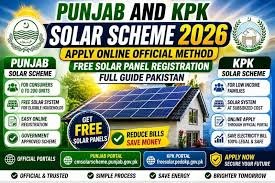
Electricity bills in Pakistan have become a major burden for millions of families. Whether you live in a small town or a big city, the rising cost of power is something almost every household is dealing with every single day.
The good news? The government and several organizations are offering free or subsidized solar panels in 2026 to help low-income and middle-class families switch to clean, affordable energy.
In this guide, you will learn everything about free solar panel programs in Pakistan — who qualifies, how to apply, what benefits you get, and practical tips to make the most of solar energy.
What Are Free Solar Panel Programs in Pakistan?
Free solar panel programs are government-backed or NGO-supported initiatives that provide solar energy systems to households at no cost or at heavily subsidized rates.
These programs are designed to:
- Reduce dependence on the national electricity grid
- Help low-income families save money on monthly bills
- Promote clean and renewable energy across the country
- Reduce load shedding pressure on the national system
In Pakistan, programs like the Prime Minister’s Solar Panel Scheme, provincial energy initiatives, and international development partnerships have been providing solar solutions to deserving households for several years now.
Key Benefits of Getting Free Solar Panels
Getting solar panels through a government scheme is not just about saving money — it comes with a range of long-term advantages.
💡 Lower Electricity Bills Once solar panels are installed, your monthly electricity bill can drop by 60% to 90%, depending on your usage and system size.
🌍 Clean and Green Energy Solar power produces zero emissions. You contribute to a healthier environment for future generations.
🔋 Backup During Load Shedding Solar systems with battery storage keep your home powered even when the grid goes down — a huge relief in areas with frequent load shedding.
🏠 Increased Property Value A home with a solar system is considered more valuable in the real estate market.
📉 Protection from Rising Tariffs As electricity prices keep rising, solar energy shields you from future bill shocks.
🔧 Low Maintenance Solar panels require very little maintenance once installed. A basic cleaning every few months is usually enough.
Government Solar Panel Schemes in Pakistan 2026
Here are the main programs currently available or being expanded in 2026:
1. Prime Minister’s Solar Panel Scheme
This is one of the biggest solar initiatives in Pakistan. It targets low-income households with monthly electricity bills under Rs. 500. Selected families receive solar systems completely free of charge. The program has been expanded in 2026 to cover more rural and semi-urban areas.
2. Punjab Solar Energy Program
The Punjab government has been running a dedicated solar energy initiative for farmers and rural households. It focuses on agricultural tube wells and small homes in underdeveloped districts.
3. KPK Clean Energy Initiative
Khyber Pakhtunkhwa has partnered with international donors to bring solar energy to remote off-grid villages where electricity never reached before.
4. Sindh Solar for Schools and Homes
The Sindh government has launched solar programs targeting both public schools and low-income residential areas in rural Sindh.
5. AEDB (Alternative Energy Development Board) Programs
AEDB runs national-level projects and also facilitates subsidized financing options for households that do not fully qualify for free panels but still want affordable solar solutions.
Who Is Eligible for Free Solar Panels?
Eligibility varies by program, but common criteria include:
- Monthly electricity bill below Rs. 500 or Rs. 1,000 (depending on the scheme)
- Registered on BISP (Benazir Income Support Program) or similar poverty database
- Resident of a rural or semi-urban area
- Valid CNIC (National Identity Card)
- Home ownership or proof of long-term residence
- No previous solar installation at the property
Farmers with small landholdings and small businesses in remote areas may also qualify under certain provincial programs.
How to Apply — Step by Step
Applying for a free solar panel scheme in Pakistan is simpler than most people think. Here is how you can get started:
Step 1 — Check Your Eligibility Visit the official AEDB website or your provincial energy department’s portal. Review the eligibility criteria carefully.
Step 2 — Gather Your Documents Prepare the following:
- Copy of CNIC
- Recent electricity bill
- Proof of address (utility bill or property documents)
- BISP card (if applicable)
Step 3 — Submit Your Application Applications can be submitted online through official government portals or in person at designated district offices and NADRA centers.
Step 4 — Verification Visit A government-appointed team may visit your home to verify your information and assess the location for solar installation.
Step 5 — Installation Once approved, a certified team installs the solar system at your home. Installation is handled completely by the program — you do not need to arrange anything yourself.
Step 6 — Training and Handover You will receive basic training on how to use and maintain the system before it is officially handed over to you.
Comparison — Free Scheme vs Self-Purchase vs Financing
| Option | Cost | Accessibility | Best For |
|---|---|---|---|
| Free Government Scheme | Zero cost | Limited to eligible households | Low-income families |
| Subsidized Financing | Low monthly installments | Wider eligibility | Middle-income households |
| Self Purchase | Full market price | Anyone | High-income or business owners |
| Bank Solar Loans | Repaid over time | Salaried or business persons | Those with income proof |
If you do not qualify for a free scheme, subsidized financing through banks like Bank of Punjab or National Bank of Pakistan is a very practical alternative with easy monthly repayments.
Pros and Cons of Free Solar Panel Programs
✅ Pros
- Zero upfront cost for eligible households
- Immediate reduction in electricity bills
- Government-certified and quality-assured installation
- Reliable after-sales support in most programs
- Contributes to national energy independence
❌ Cons
- Limited availability — not everyone qualifies
- Processing and approval can take time
- Some remote areas face delays in installation
- System sizes may be small (usually 300W to 1kW for homes)
- Dependent on weather conditions for optimal output
Practical Tips to Make the Most of Your Solar System
Whether you receive panels through a government program or purchase them yourself, these tips will help you get maximum value:
Use High-Consumption Appliances During the Day Run your washing machine, iron, and other heavy appliances during daylight hours when your panels are producing the most power.
Invest in a Good Battery A quality battery ensures you have stored power available at night or during cloudy days. This is especially important during the monsoon season.
Keep Panels Clean Dust and dirt reduce efficiency. Clean your panels with a soft cloth and water at least once a month, especially in dry and dusty areas like Punjab and Sindh.
Monitor Your System Many solar systems come with basic monitoring apps or displays. Keep an eye on your daily production to spot any issues early.
Avoid Shade on Panels Even partial shading from a tree or nearby building can significantly reduce output. Make sure your panels are installed in a spot that gets direct sunlight for most of the day.
Understand Net Metering If your system produces more electricity than you use, Pakistan’s net metering policy allows you to send the extra power back to the grid and get credit on your electricity bill. Explore this option with your electricity company.
Frequently Asked Questions (FAQs)
Q1. Are free solar panels really available in Pakistan in 2026? Yes. The government has expanded several solar schemes in 2026, particularly for low-income households and rural areas. Programs run through AEDB and provincial energy departments are actively enrolling eligible applicants.
Q2. How do I know if I qualify for a free solar panel scheme? The main requirement for most schemes is a low monthly electricity bill (usually under Rs. 500 to Rs. 1,000) and registration in a poverty alleviation program like BISP. Check the official government portals for the most current eligibility criteria.
Q3. How long does the application process take? It varies by region and program. In some areas, the process takes a few weeks. In others, especially remote regions, it may take a few months due to high demand and logistical challenges.
Q4. What size solar system will I receive? Most free schemes offer small systems between 300 watts and 1 kilowatt. This is enough to power basic appliances like fans, lights, and a small television. Larger systems may be available under subsidized financing programs.
Q5. Can I apply if I am a renter, not a homeowner? Some programs do accept renters, but most prefer homeowners or those with long-term proof of residence. It is best to check the specific requirements of the program you are applying to.
Conclusion
Free solar panels in Pakistan in 2026 represent a real opportunity for millions of families to escape the burden of high electricity bills and frequent power outages. Government initiatives, provincial programs, and international partnerships are making clean energy more accessible than ever before.
Applay Now
If you qualify, do not wait — these programs have limited slots and high demand. Check your eligibility, gather your documents, and take that first step toward energy independence today.
For those who do not qualify for a fully free scheme, subsidized financing and affordable solar options are also available. Either way, solar energy is one of the smartest investments a household in Pakistan can make right now.
Explore official government portals and learn more about available solar schemes in your area to get started on your journey to cleaner, cheaper energy.